WeChat

FlowBeijing

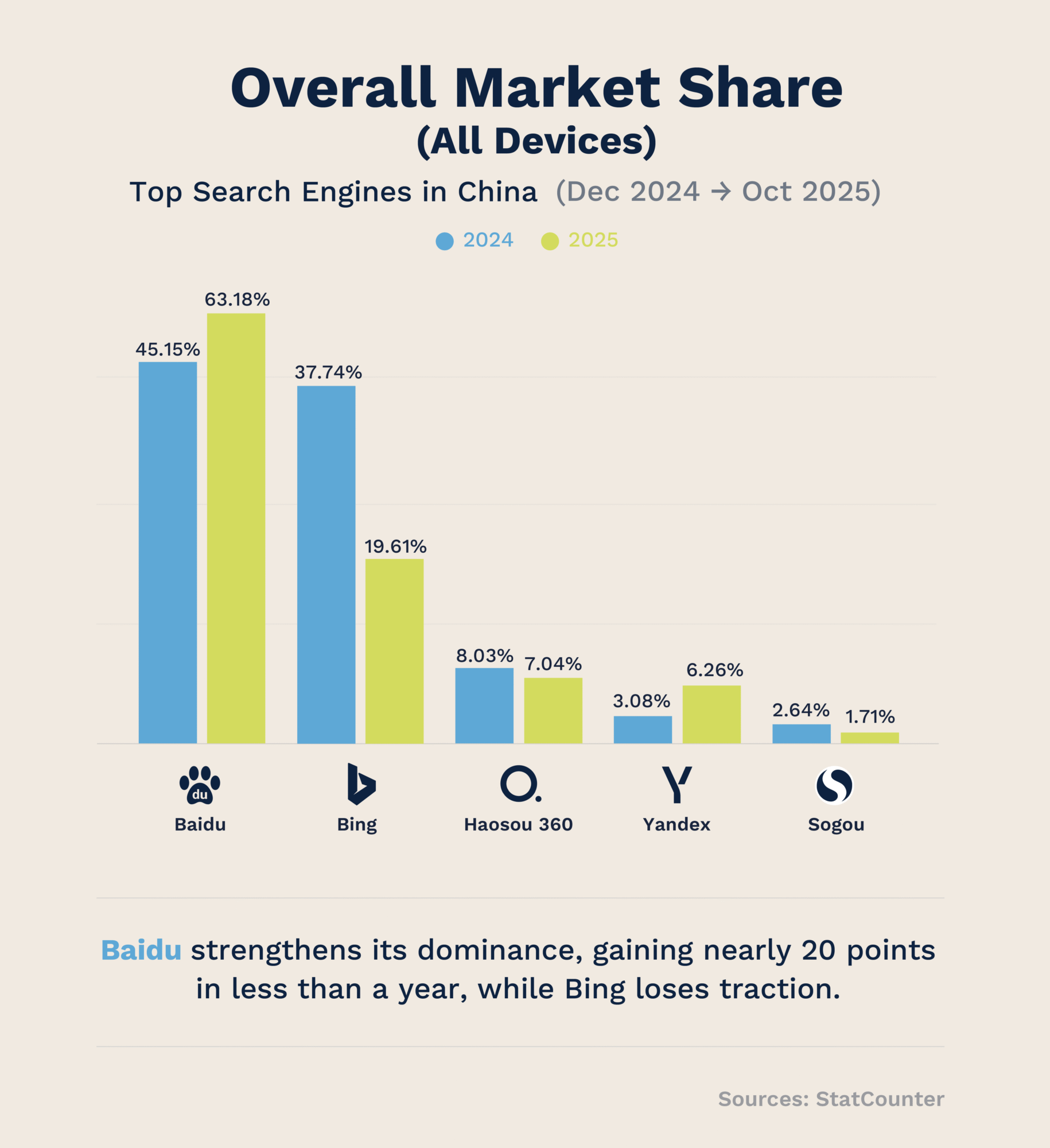
Overall Market Share
(All Devices)
Top Search Engines in China — Dec 2024 → Oct 2025
- Baidu 45.15 % -> 63.18 %
- Bing 37.74 % -> 19.61 %
- Haosou 360 8.03 % -> 7.04 %
- Yandex 3.08 % -> 6.26 %
- Sogou 2.64 % -> 1.71 %
Baidu strengthens its dominance, adding nearly 20 points in less than a year while Bing loses traction.
Source: StatCounter
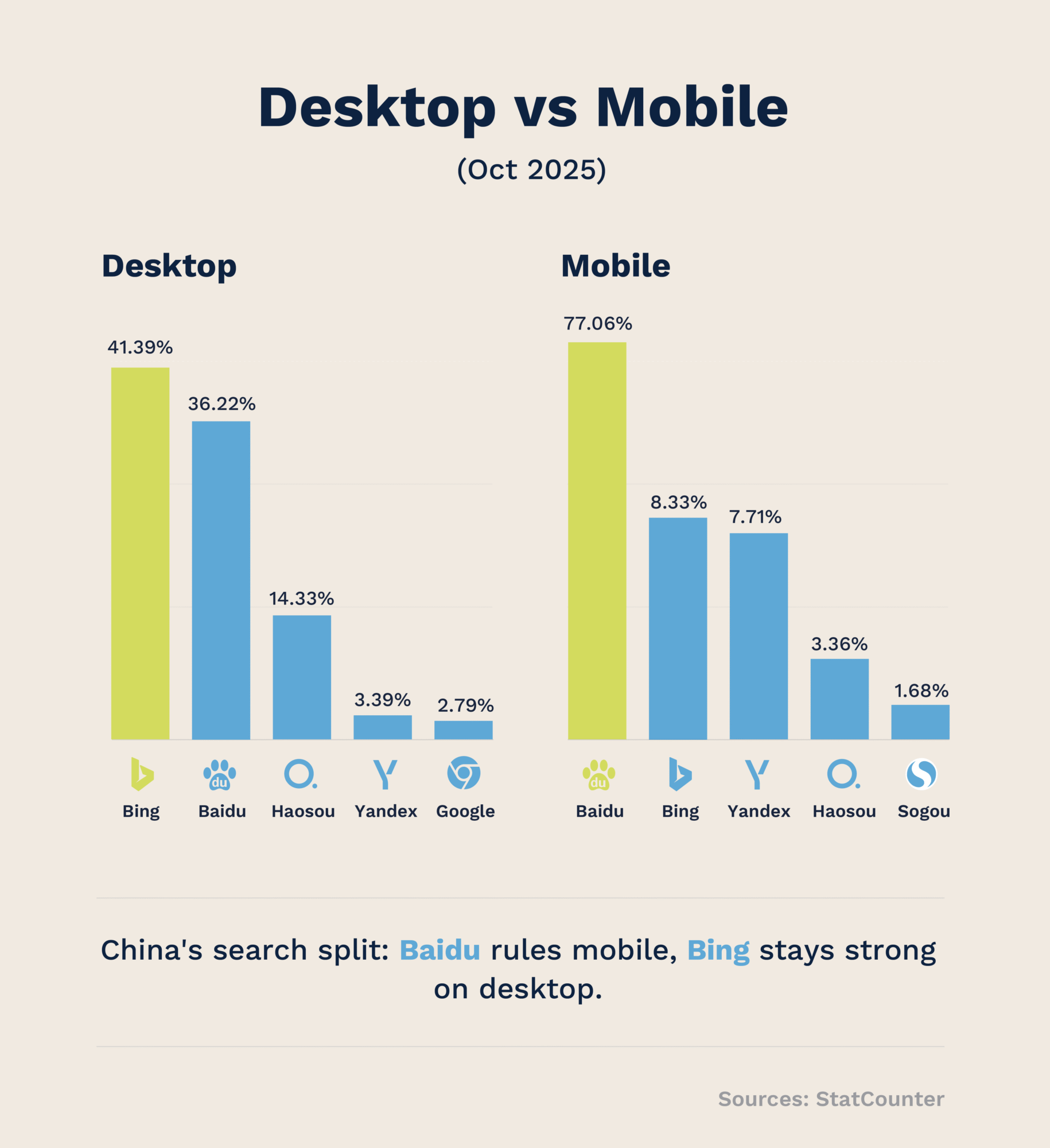
Desktop vs Mobile Breakdown
(Oct 2025)
Desktop
- Bing 41.39 %
- Baidu 36.22 %
- Haosou 14.33 %
- Yandex 3.39 %
- Google 2.79 %
Mobile
- Baidu 77.06 %
- Bing 8.33 %
- Haosou 3.36 %
- Yandex 7.71 %
- Sogou 1.68 %
China’s search split: Baidu rules mobile, Bing stays strong on desktop.
Source: StatCounter
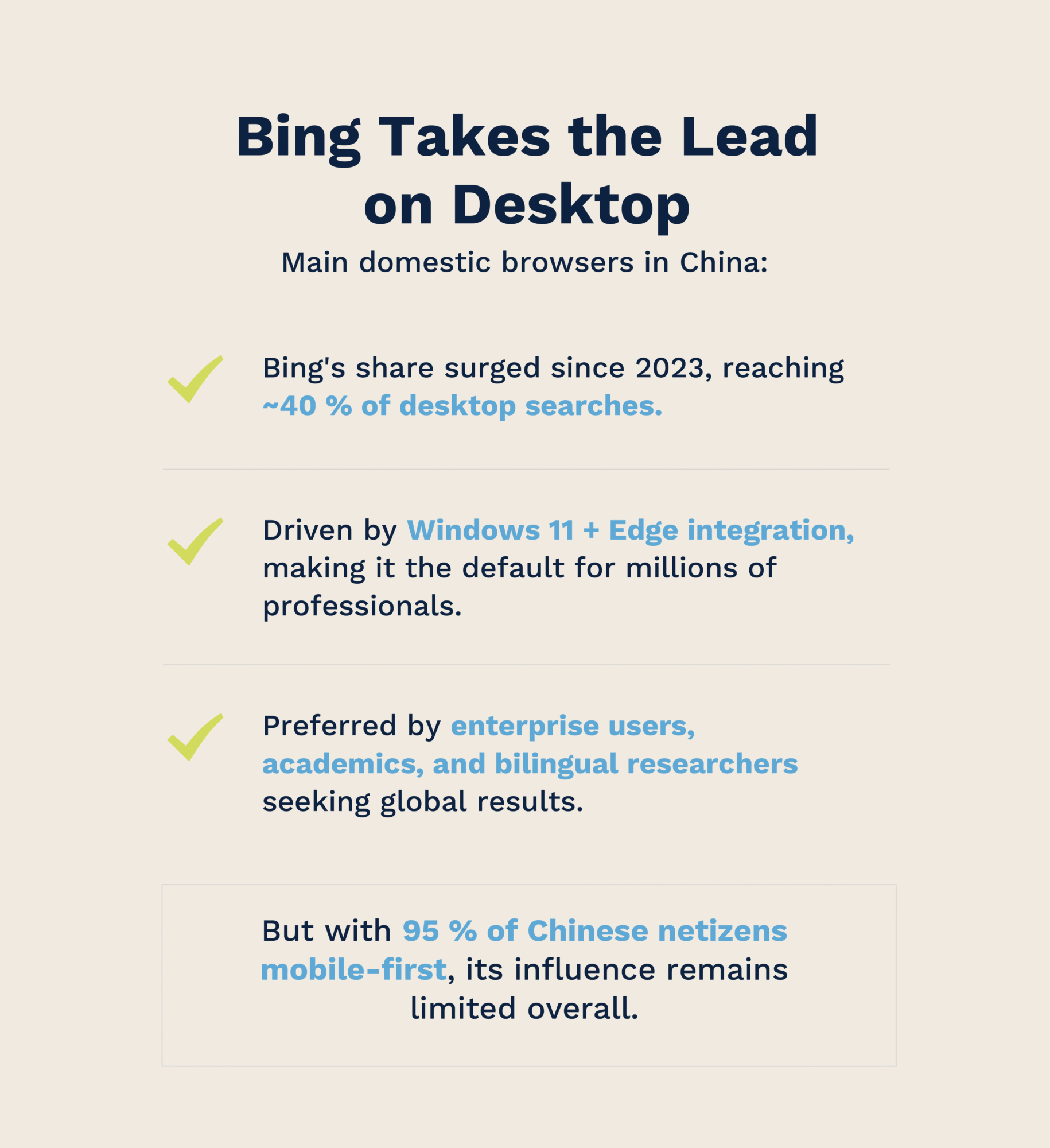
Bing Takes the Lead on Desktop
Main domestic browsers in China:
- Bing’s share surged since 2023, reaching ~40 % of desktop searches.
- Driven by Windows 11 + Edge integration, making it the default for millions of professionals.
- Preferred by enterprise users, academics, and bilingual researchers seeking global results.
But with 95 % of Chinese netizens mobile-first, its influence remains limited overall.
Why Baidu Still Rules Mobile & Overall
- Baidu dominates mobile with ~77 % market share, securing its overall lead in China’s mobile-first internet landscape.
- Its vast app ecosystem — spanning search, maps, news, mini-programs, and payments — keeps users inside Baidu’s network.
- The AI-powered ERNIE Bot enhances search accuracy, voice recognition, and multi-modal experiences, driving deeper engagement.
Together, these strengths make Baidu not just a search engine, but a complete digital ecosystem built for China’s on-the-go users.

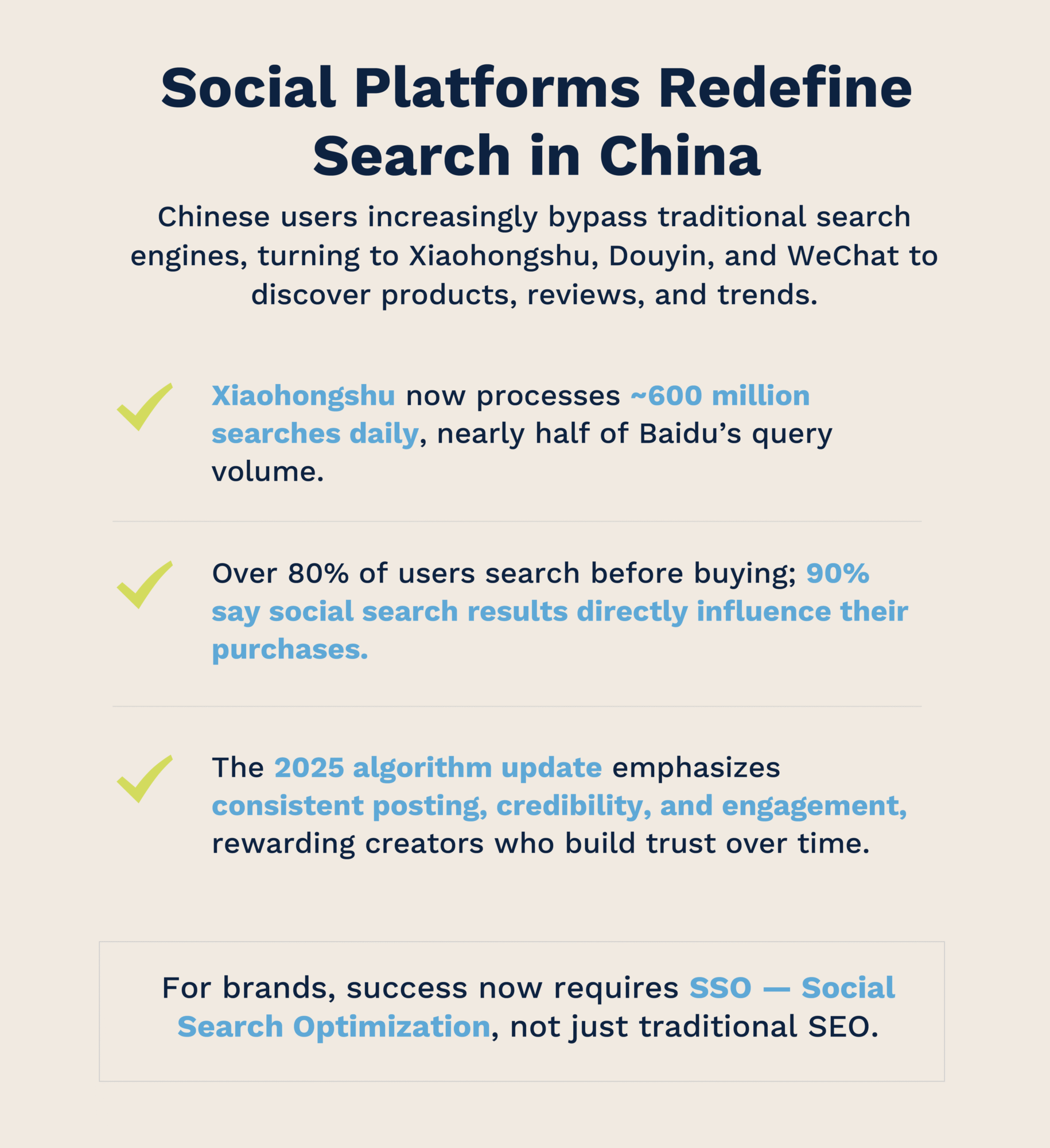
Social Platforms Redefine Search in China
Chinese users increasingly bypass traditional search engines, turning to Xiaohongshu, Douyin, and WeChat to discover products, reviews, and trends.
- Xiaohongshu now processes ~600 million searches daily, nearly half of Baidu’s query volume.
- Over 80 % of users search before buying; 90 % say social search results directly influence their purchases.
- The 2025 algorithm update emphasizes consistent posting, credibility, and engagement, rewarding creators who build trust over time.
For brands, success now requires SSO — Social Search Optimization, not just traditional SEO.
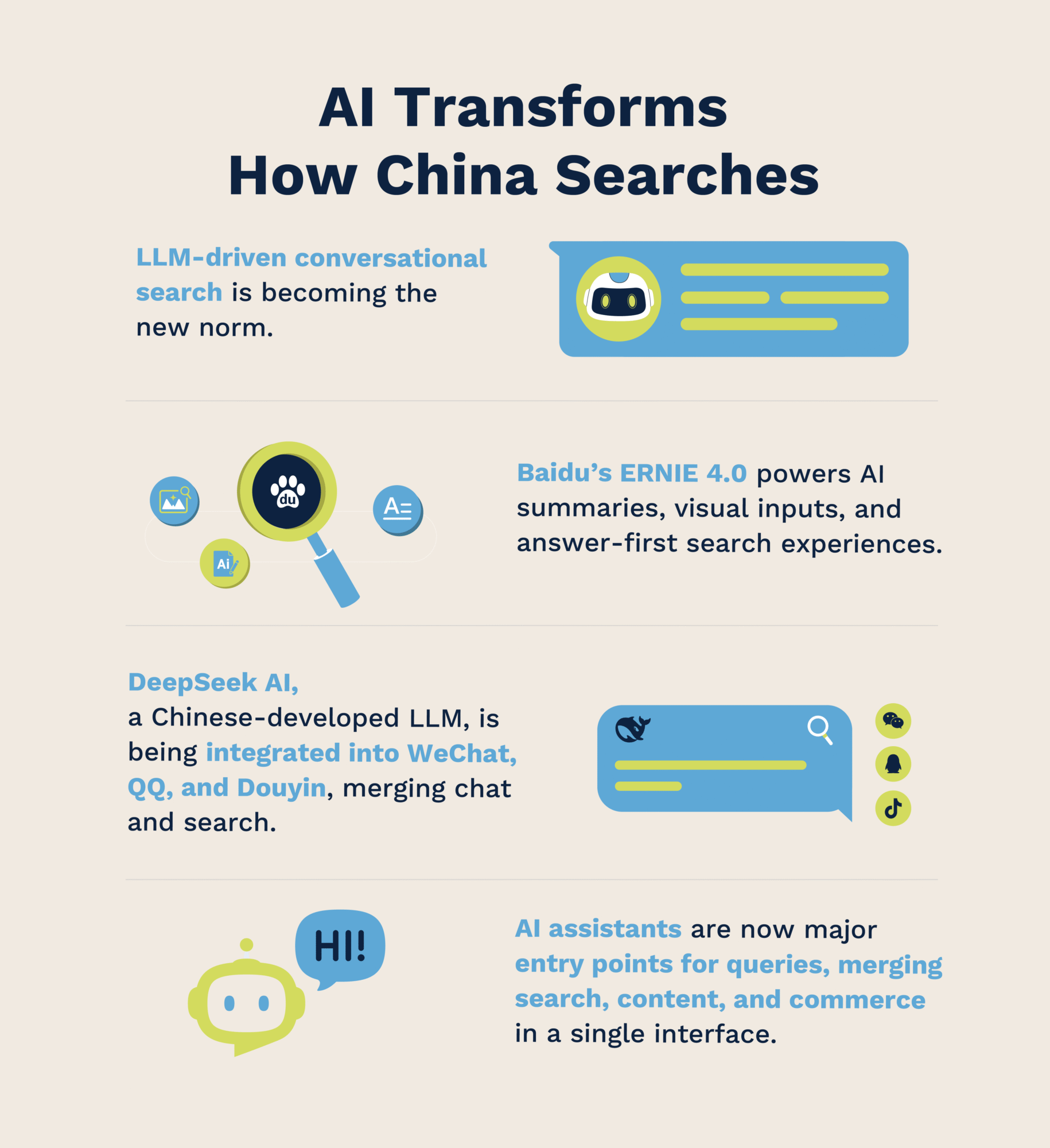
AI Transforms How China Searches
- LLM-driven conversational search is becoming the new norm.
- Baidu’s ERNIE 4.0 powers AI summaries, visual inputs, and answer-first search experiences.
- DeepSeek AI, a Chinese-developed LLM, is being integrated into WeChat, QQ, and Douyin, merging chat and search.
- AI assistants are now major entry points for queries, merging search, content, and commerce in a single interface.