WeChat

FlowBeijing
When a B2B buyer lands on your China site, they are not browsing for fun. They are checking if you look legitimate, if you can actually deliver, and if it is worth contacting you. That is what B2B website design China has to support. Clear information, proof that is easy to verify, and a next step that feels simple. In practice, B2B website design China focuses on structuring pages to support trust, clarity, and conversion within the Chinese digital environment.
Why B2B sites miss Website conversion China
Most conversion problems come from three basic issues. The first is structure. Visitors cannot quickly understand what you do, who it is for, or where to click next. They leave because the site makes them work too hard. The second is trust. The site uses generic claims but does not show proof like real case studies, certifications, or customer testimonials. In China, that difference quickly destroys trust. The third is friction. Contact details are buried, forms are long, resources are hard to access, or the CTA is unclear. Even interested buyers drop off. If you fix those three, Website conversion China improves because the site stops fighting the user. Fixing these issues is a core part of improving B2B website design China performance, not just isolated conversion optimization.
A practical China web design strategy for B2B pages
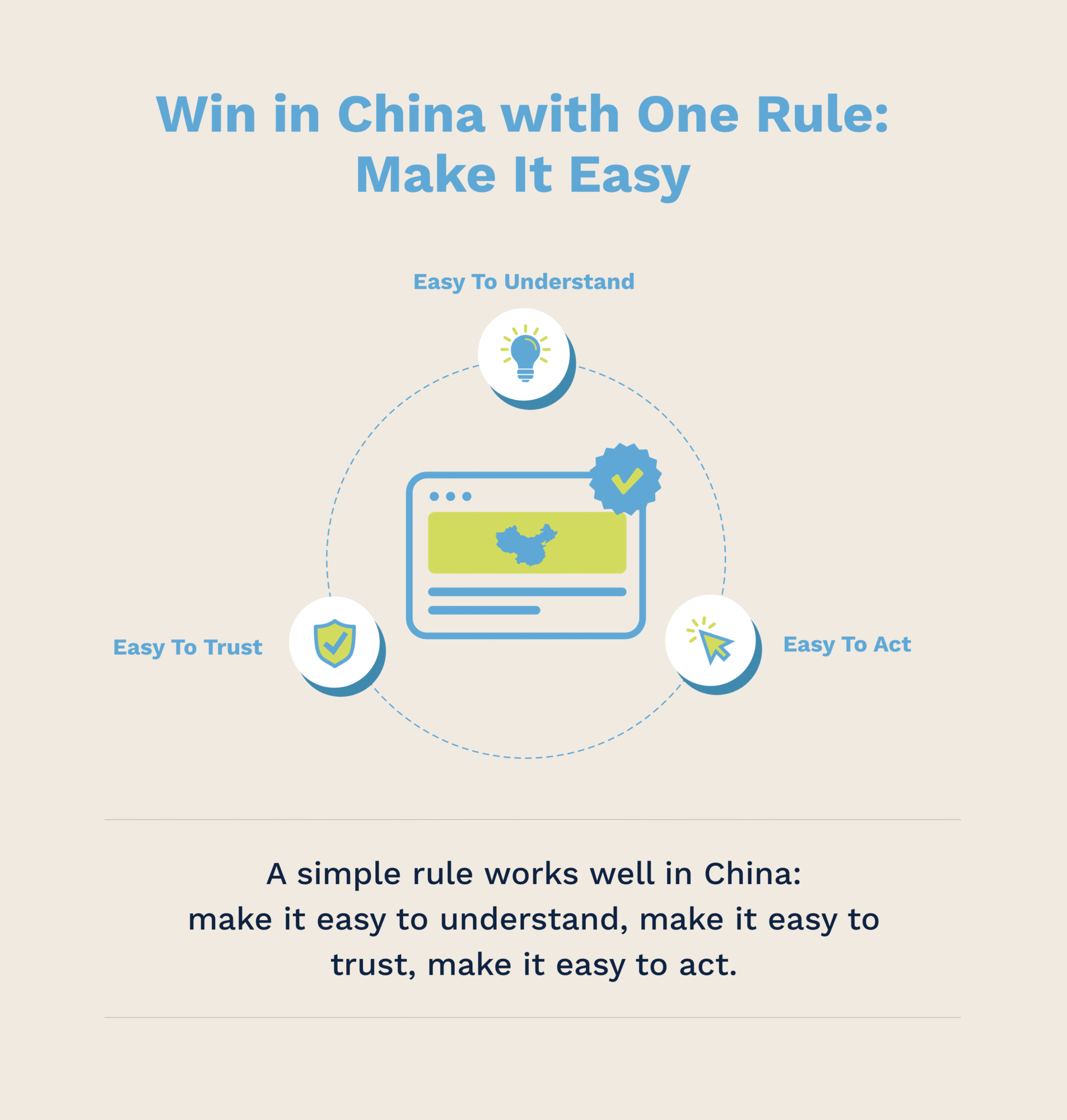
A simple rule works well in China: make it easy to understand, make it easy to trust, make it easy to act. A common way to apply it is a seven-screen structure for the homepage and key landing pages. The first screen tells what you do and gives one clear next step. The second clarifies who you serve, like specific industries or use cases. The third explains your solution in a direct and structured way. The fourth screen presents evidence through cases, certifications, or client references. The fifth explains delivery and process including milestones and quality control, so the risk feels lower. The sixth shows what makes you different, backed by facts and data. The last screen repeats the next step, so the contact option is always easy to find. That structure supports B2B website design China because it matches how buyers evaluate vendors. This structured approach is widely used in B2B website design China to align with how local buyers evaluate vendors.
Product pages usually drive more leads than the homepage
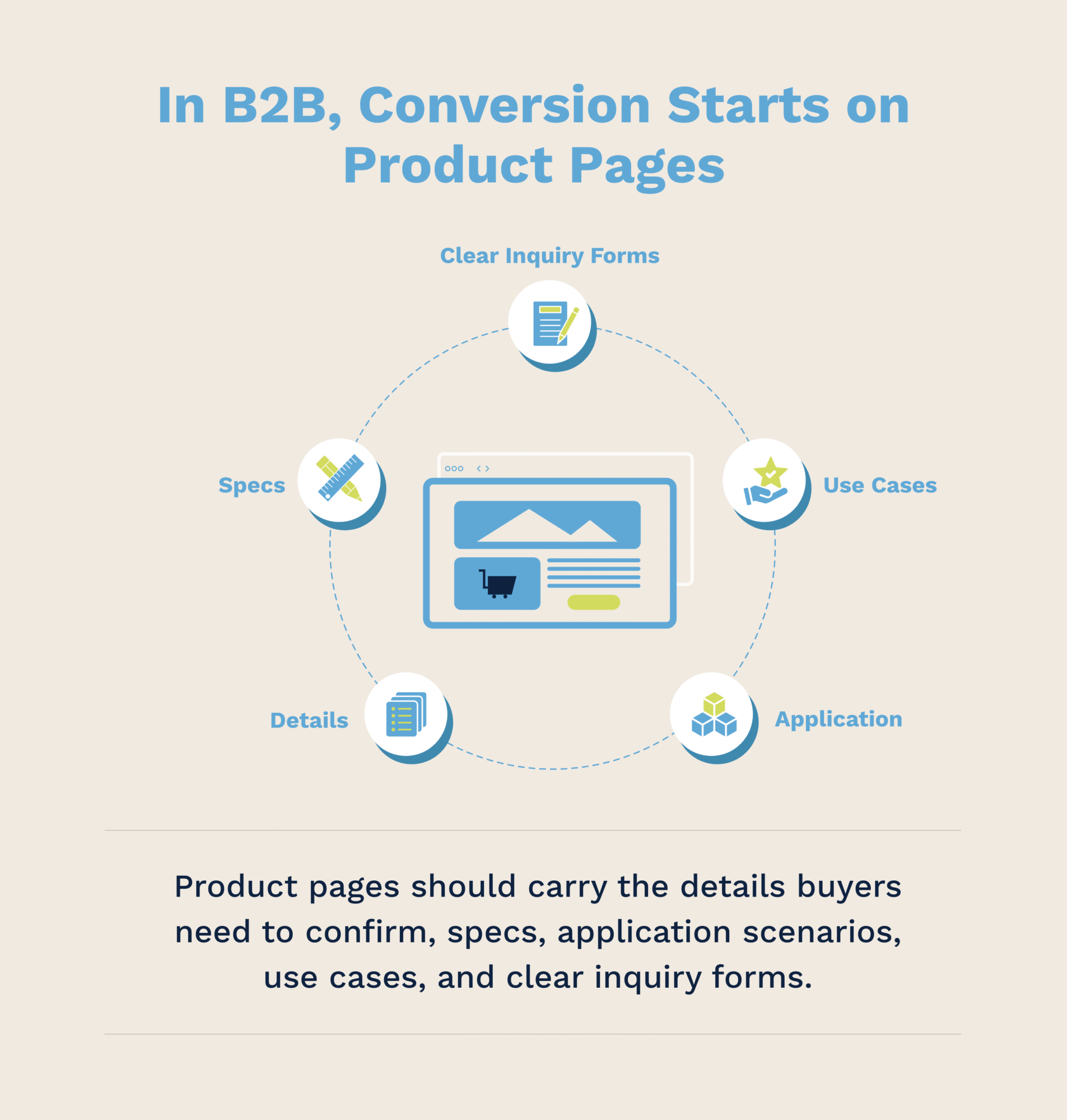
Many companies over-invest in the homepage and underbuild the pages that actually convert. In one industrial B2B case, over 73% of organic traffic landed directly on product detail pages. Around 80% of inquiries came from forms on those product pages. The homepage bounce rate was 58%. That tells you where the work needs to go. Product pages should carry the details buyers need to confirm, specs, application scenarios, use cases, and clear inquiry forms. The homepage should help people find the right path, not try to explain everything. In that same case, cutting the number of steps from category pages to product pages to forms by one step increased form submissions. This is a good example of UX design China applied to B2B, fewer steps, fewer people leave. Learn more about our Website Design and Development services in China.
The trust issue
Trust cannot be a row of logos and a few vague lines. A strong pattern is a block of evidence that you can use on the homepage, product pages, and landing pages. Start with a clear statement. Include proof, like data, case results, or a quote, to back up your point. Set limits so the customer knows what you will and won’t do. Then talk about how you deliver, including quality control and milestones. This works because it answers the real question a buyer has in their head, why should I trust you with this decision. In China digital experience design, this type of structured proof is critical to reduce perceived risk in B2B decision-making.
Baidu discoverability supports Lead generation website China
Even a well-built page won’t convert if no one finds it. For Baidu, technical basics matter. Use clean URL structures that you can control. Add structured data. Generate a sitemap.xml and set robots.txt correctly. Improve speed with standard performance work, such as lazy loading images and combining JS and CSS where it makes sense, because load speed affects ranking. Good structure helps both crawling and user navigation once they land. That is why this is part of the lead generation website China, not just SEO. Discover how our SEO services improve visibility in China.
Conversion points that feel normal in 2026
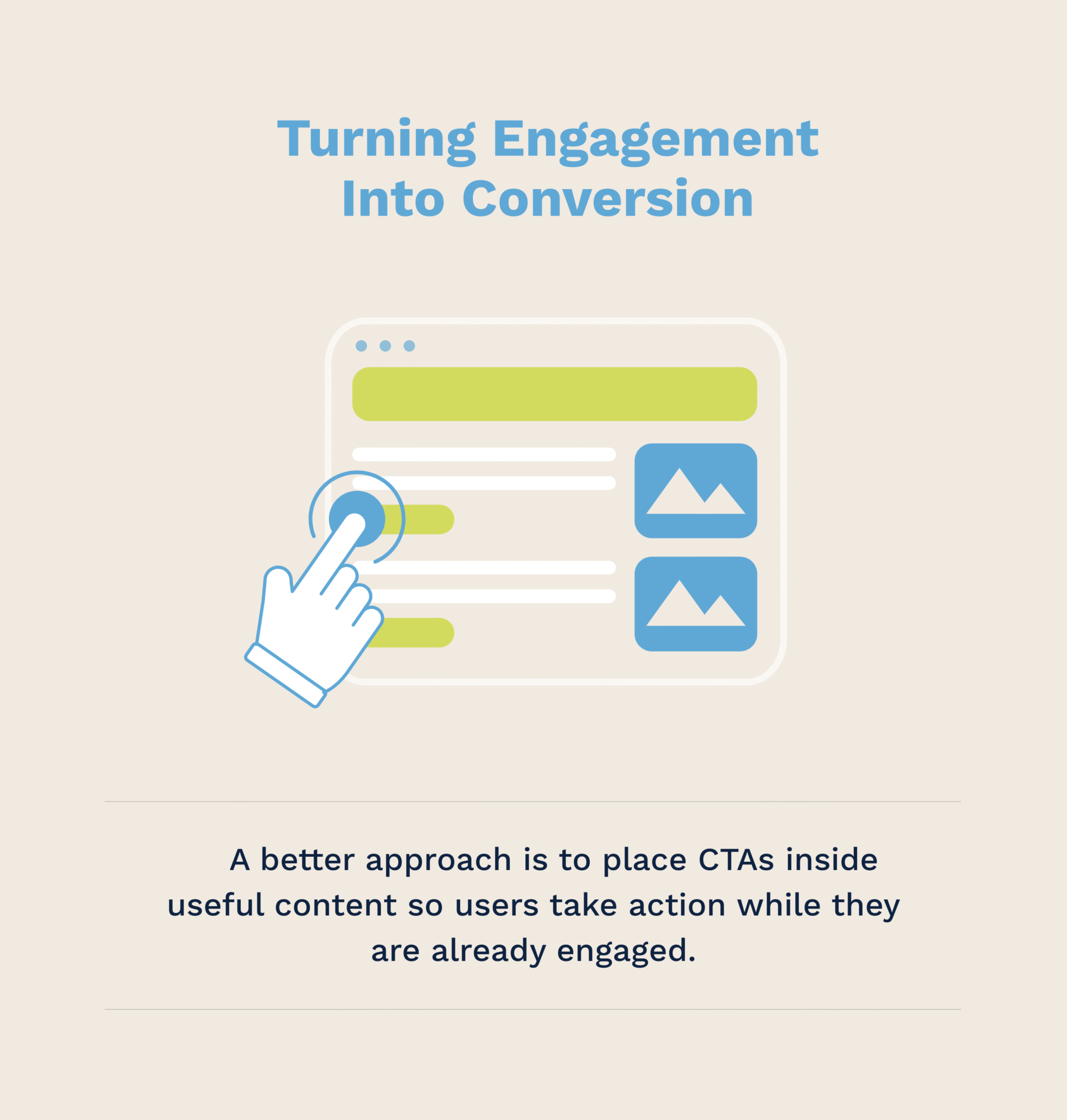
Aggressive pop-ups often do more harm than good on B2B sites, especially for higher-end brands. A better approach is to place CTAs inside useful content so users take action while they are already engaged. Utility tools also work well. ROI calculators, solution finders, and problem diagnosis tools give value first and then capture a lead. For example, a diagnostic tool that suggests solutions depending on what the user says and helps an industrial equipment site get more leads. Another helpful pattern is progressive disclosure. Don’t put everything on the first screen. Help the user as they scroll so that the page is easier to read and finish. These patterns are especially effective when aligned with localized user behavior in China web design strategy.
Design and engineering choices that help conversions
On the design side, clarity wins. Clean hierarchy, easy-to-read sans-serif fonts, and enough whitespace to quickly understand technical text. In industrial B2B, cool tones such as blues and grays are often used to show stability and security, with a single accent color for CTAs. On the content side, use multimedia only where it helps understanding. If a product is hard to understand, high-quality pictures, videos that explain how it works, and 3D views can help. On the engineering side, performance is non-negotiable. Use strong hosting, a CDN, and basic optimizations. Build mobile-first so specs and forms work well on a phone. Track user behavior, traffic sources, and conversion paths, and connect forms to your CRM so leads do not get lost. This is also where website conversion China connects to execution. Explore our website localization solutions for China.
What good results look like
Case data shows what happens when structure, trust, and conversion paths are built properly. Koolearn, a Shenzhen-based tech company, restructured its site around awareness, trust, and conversion, resulting in a 35% increase in conversion rate. The new homepage reduced the bounce rate by 28%; an interactive solution sandbox on product pages increased time spent on the page by 42% and the number of consultation clicks by 31%. A B2B industrial parts supplier moved focus from homepage to product pages and saw time on page increase 45%, bounce rate drop from 58% to 27%, and form submissions triple. These examples show how structured B2B website design China directly impacts measurable business results.
The goal of B2B website design China is not to look fancy, but to create a structure that consistently supports lead generation. If you build pages around how buyers decide, give product pages the attention they deserve, and use repeatable proof blocks, website conversion China stops feeling random and starts feeling manageable .A well-executed B2B website design China approach turns your website into a reliable lead generation asset in the Chinese market. Contact Flow Asia today to build or rebuild your China B2B website with a conversion-focused design that makes it easy for Chinese buyers to compare vendors and request quotes.