WeChat

FlowBeijing
Why AI Search Is the Future
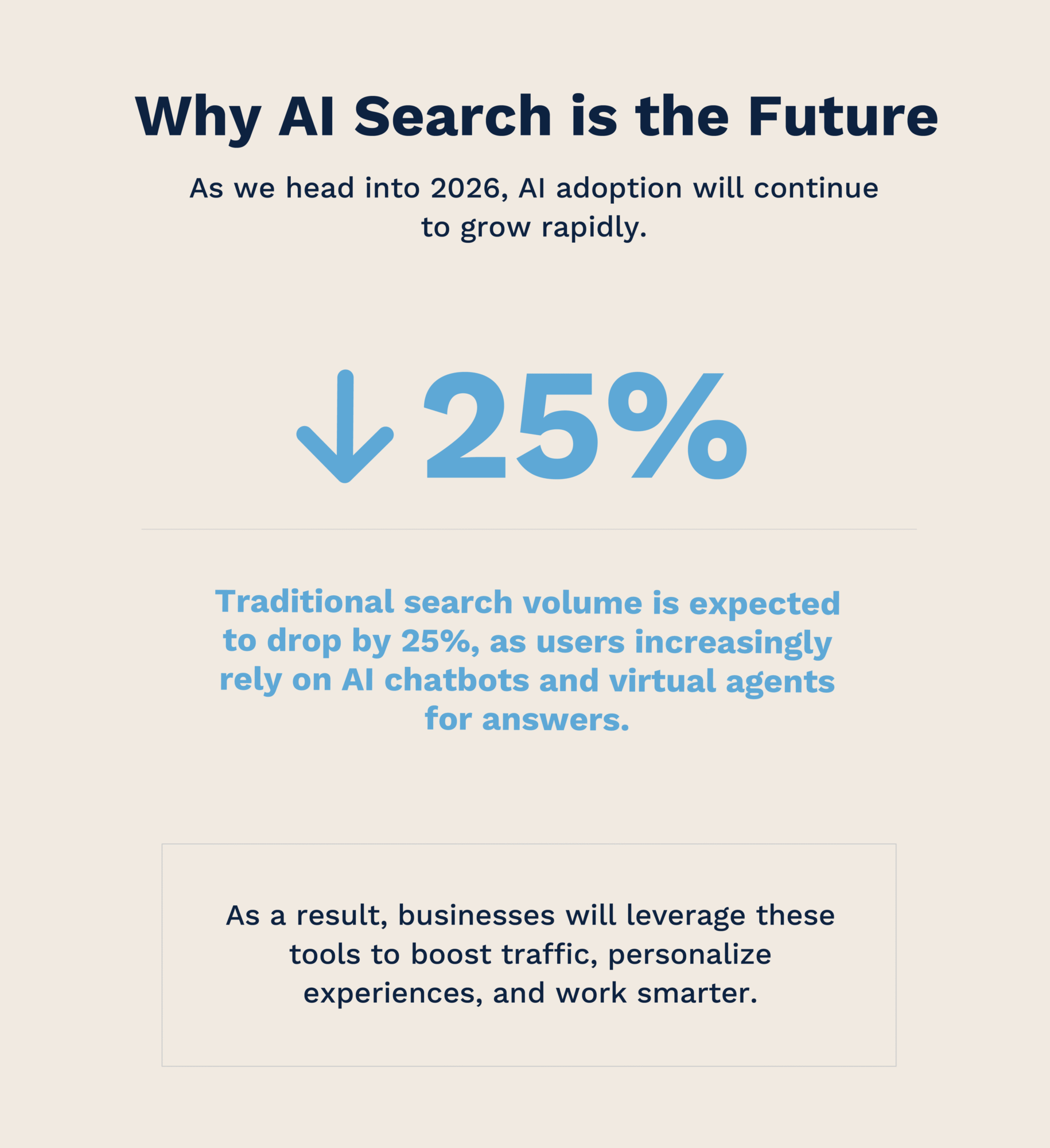
As we head into 2026, AI adoption will continue to grow rapidly. Gartner predicts a 25% drop in traditional search volume, as more people rely on AI chatbots and virtual assistants for answers.
- Traditional Search (Google) 89,56%
- AI Search (Aggregate LLMs) 7,82%
- Source: StatCounter, 2025
As a result, businesses will leverage these tools to boost traffic, personalize experiences, and work smarter.
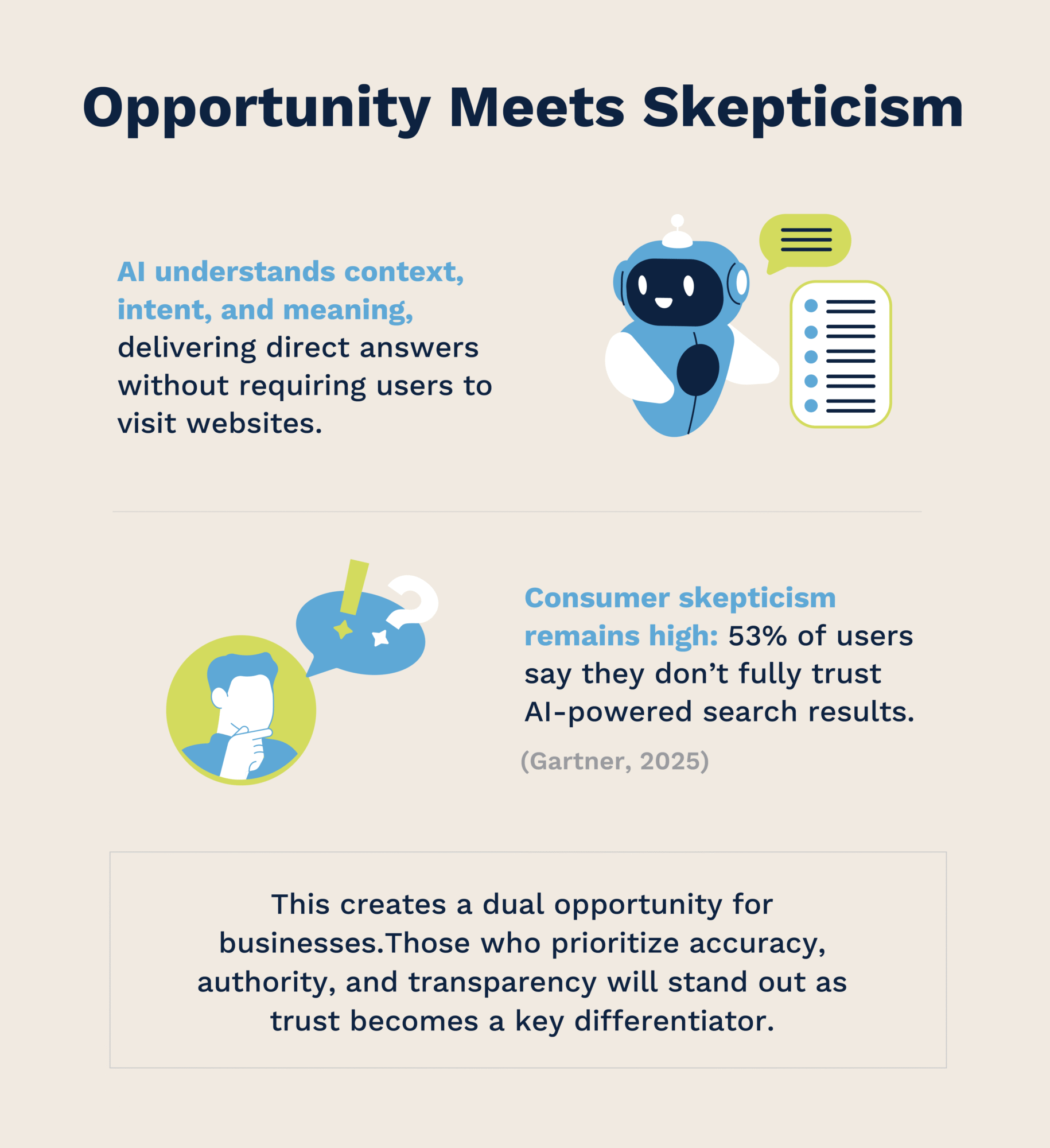
Opportunity Meets Skepticism
AI search understands context, intent, and meaning, delivering direct answers without requiring users to visit websites.
At the same time, consumer skepticism remains high.
53% of users say they do not fully trust AI-powered search results (Gartner, 2025).
This creates a dual opportunity for businesses.
Those who prioritize accuracy, authority, and transparency will stand out as trust becomes a key differentiator.
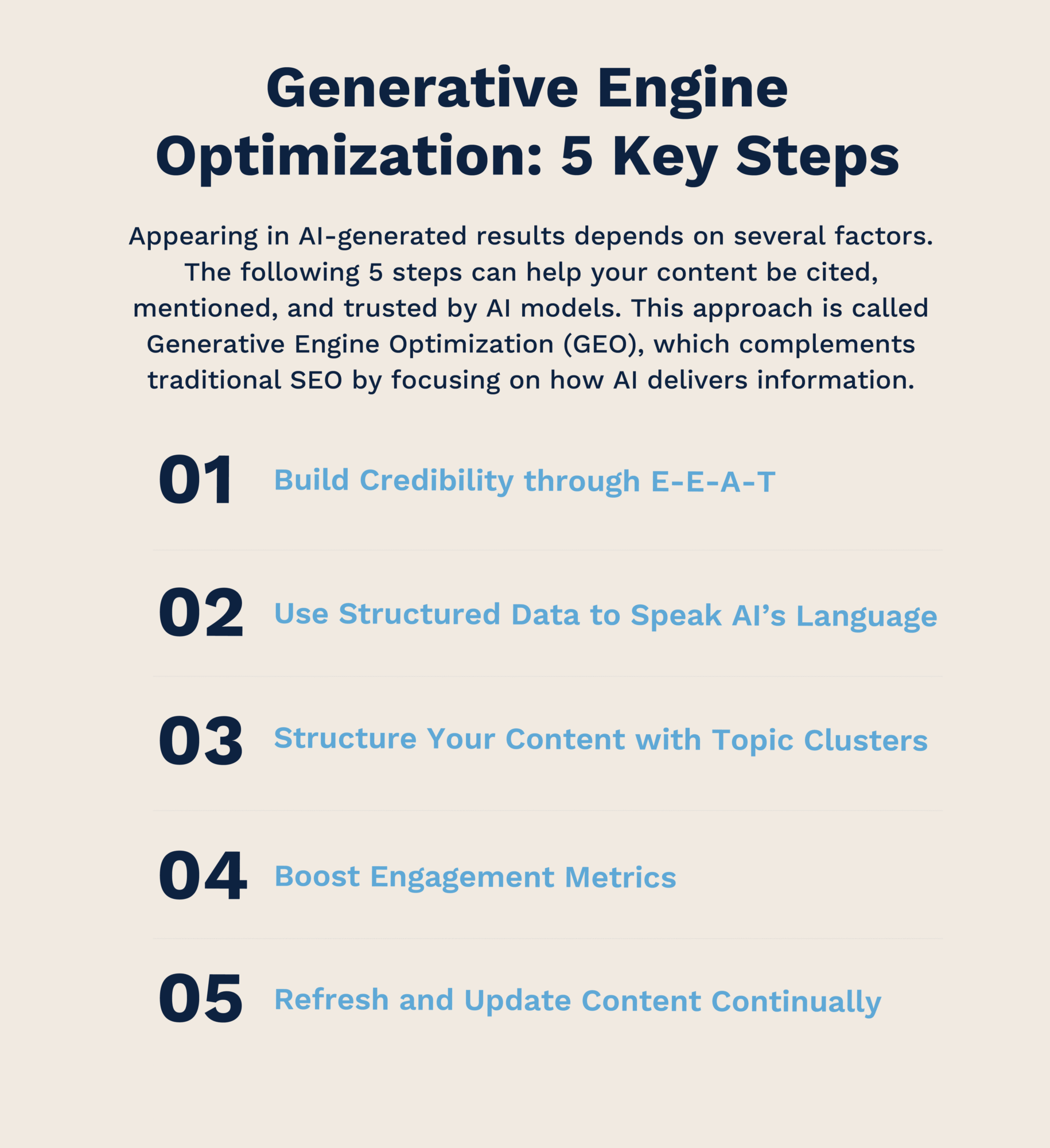
Generative Engine Optimization: 5 Key Steps
Appearing in AI-generated results depends on several factors. The following 5 steps can help your content be cited, mentioned, and trusted by AI models. This approach is called Generative Engine Optimization (GEO), which complements traditional SEO by focusing on how AI delivers information.
- Build Credibility through E-E-A-T
- Use Structured Data to speak AI’s language
- Structure Your Content with Topic Clusters
- Boost Engagement Metrics
- Refresh and Update Content Continually
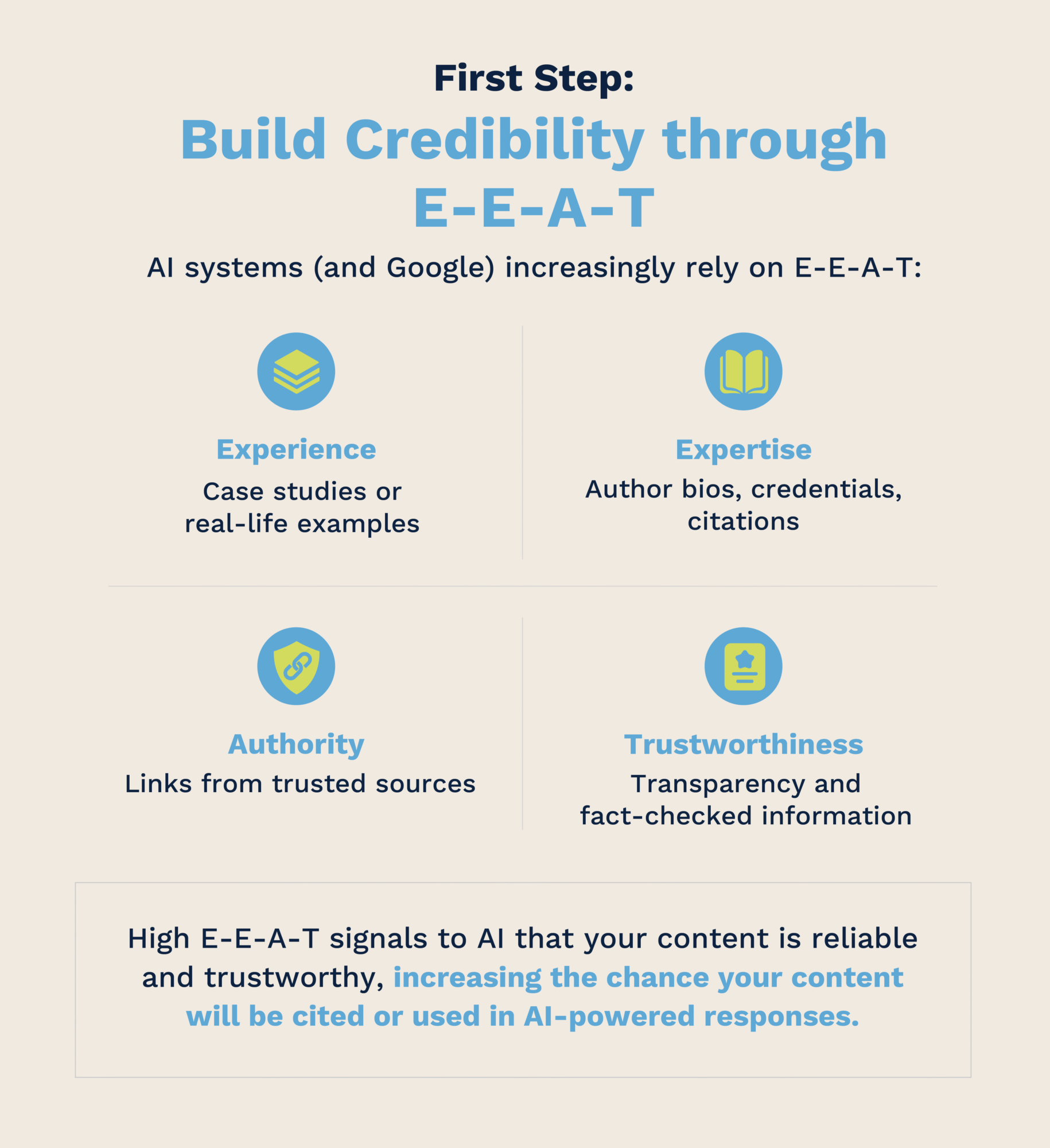
First Step: Build Credibility through E‑E‑A‑T
AI systems (and Google) increasingly rely on E‑E‑A‑T:
- Experience: case studies or real-life examples
- Expertise: author bios, credentials, citations
- Authority: links from trusted sources
- Trustworthiness: transparency and fact-checked information
High E-E-A-T signals to AI that your content is reliable and trustworthy, increasing the chance your content will be cited or used in AI-powered responses.
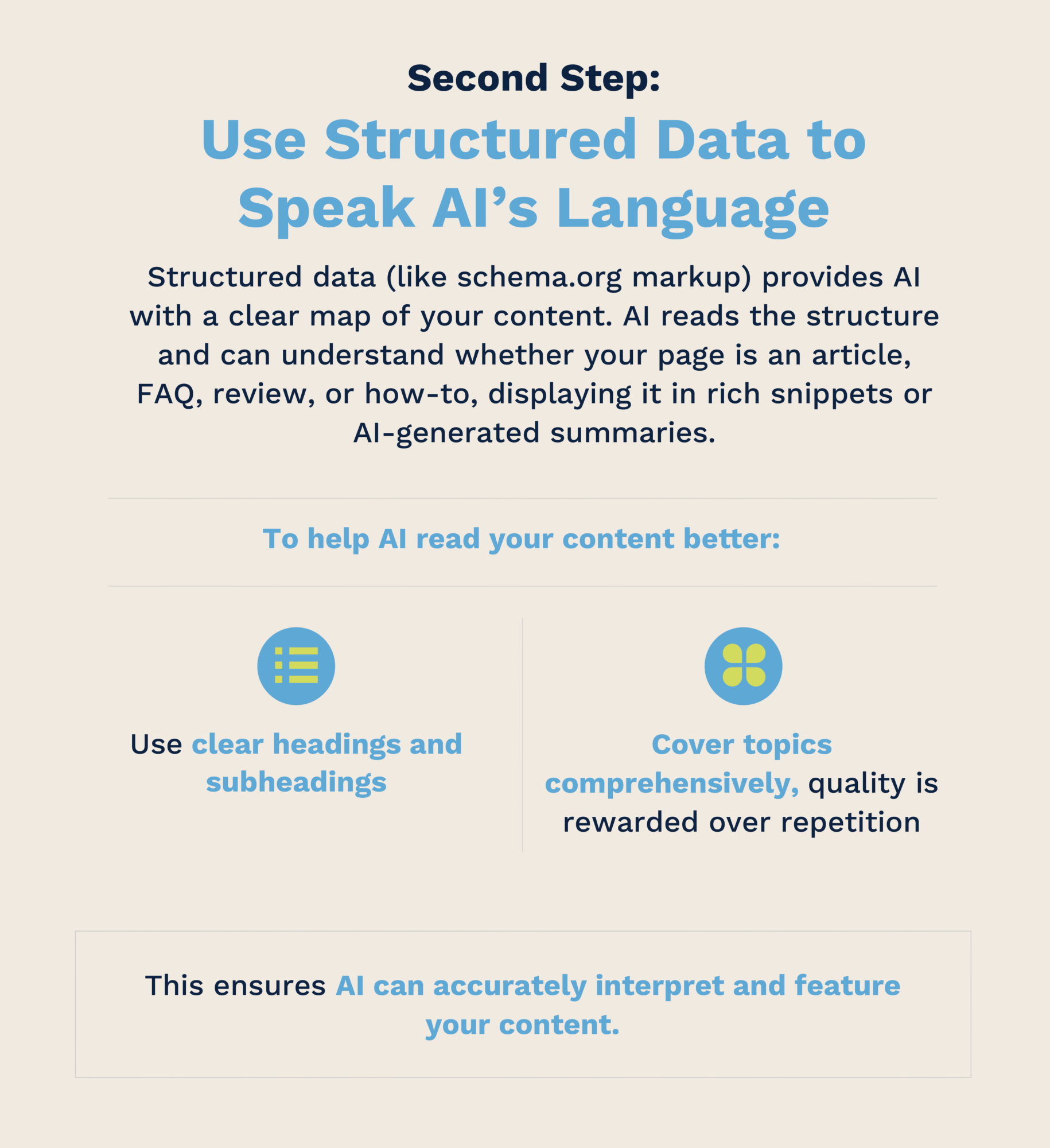
Second Step: Use Structured Data to Speak AI’s Language
Structured data (like schema.org markup) provides AI with a clear map of your content. AI reads the structure and can understand whether your page is an article, FAQ, review, or how-to, displaying it in rich snippets or AI-generated summaries.
To help AI read your content better:
- Use clear headings and subheadings
- Cover topics comprehensively, quality is rewarded over repetition
This ensures AI can accurately interpret and feature your content.
Third Step: Structure Your Content with Topic Clusters
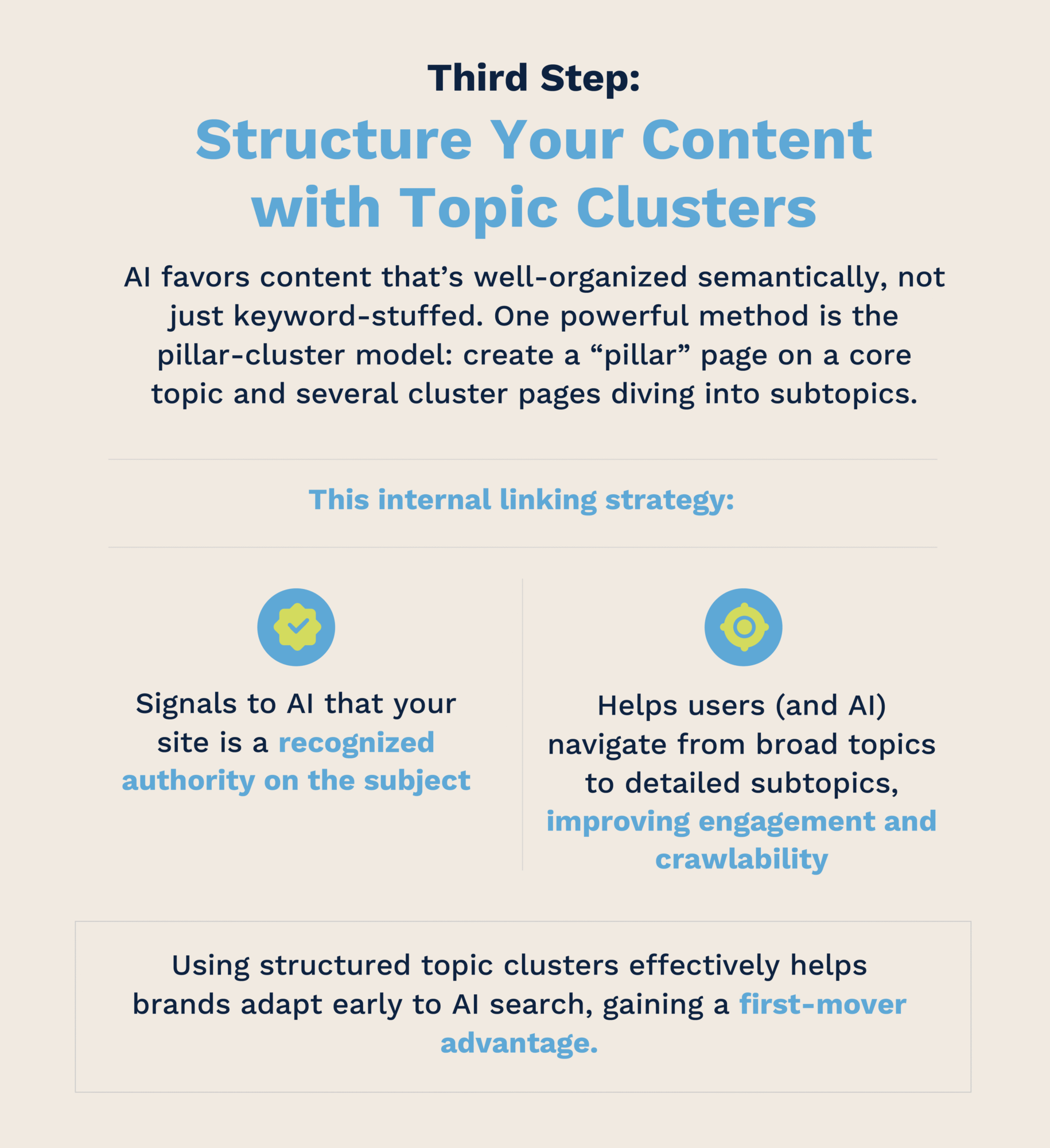
AI favors content that’s well-organized semantically, not just keyword-stuffed. One powerful method is the pillar-cluster model: create a “pillar” page on a core topic and several cluster pages diving into subtopics.
This internal linking strategy:
- Signals to AI that your site is a recognized authority on the subject
- Helps users (and AI) navigate from broad topics to detailed subtopics, improving engagement and crawlability
Using structured topic clusters effectively helps brands adapt early to AI search, gaining a first-mover advantage
Fourth Step: Boost Engagement Metrics
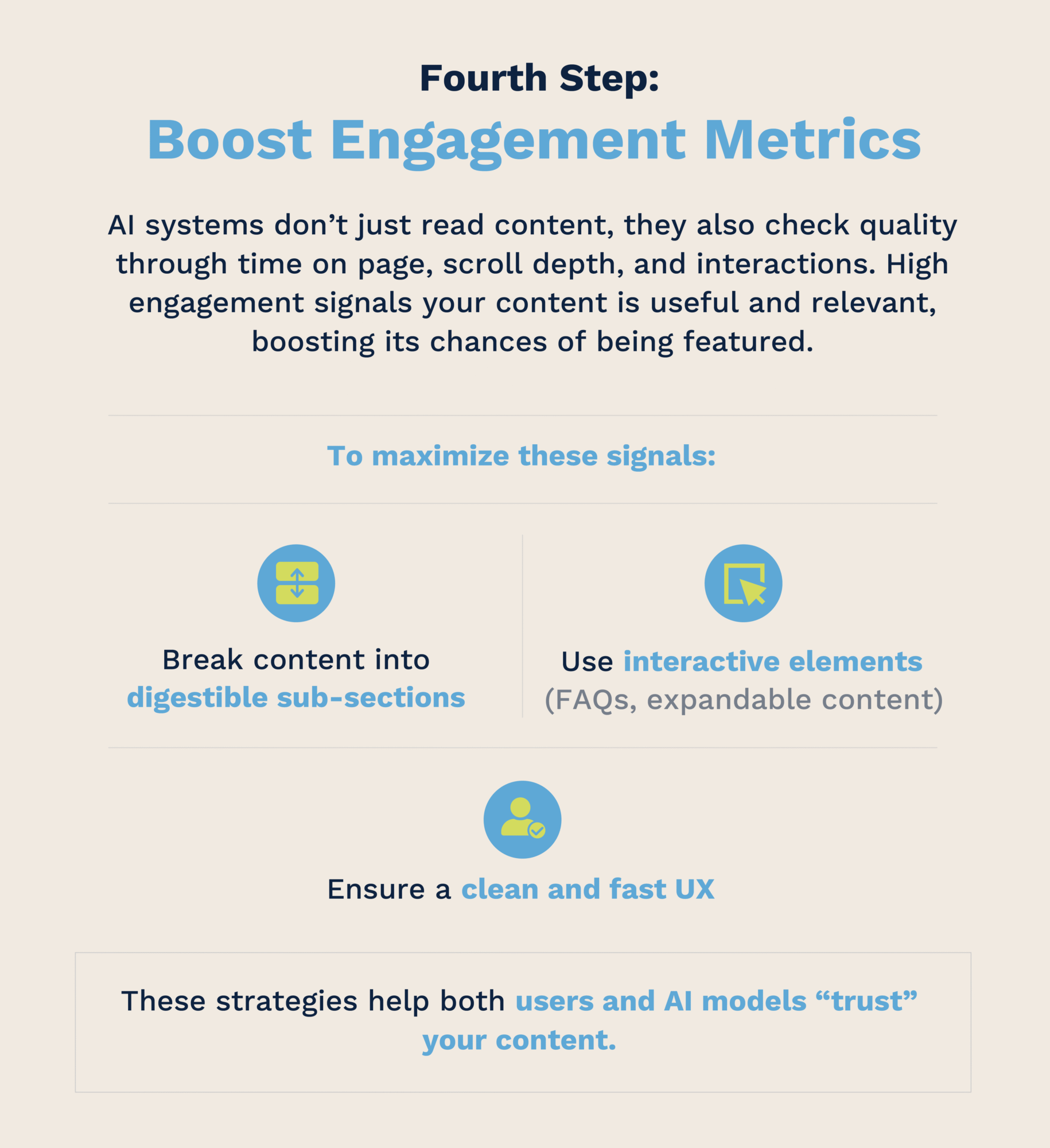
AI systems don’t just read content, they also check quality through time on page, scroll depth, and interactions. High engagement signals your content is useful and relevant, boosting its chances of being featured.
To maximize these signals:
- Break content into digestible sub-sections
- Use interactive elements (FAQs, expandable content)
- Ensure a clean and fast UX
These strategies help both users and AI models “trust” your content.
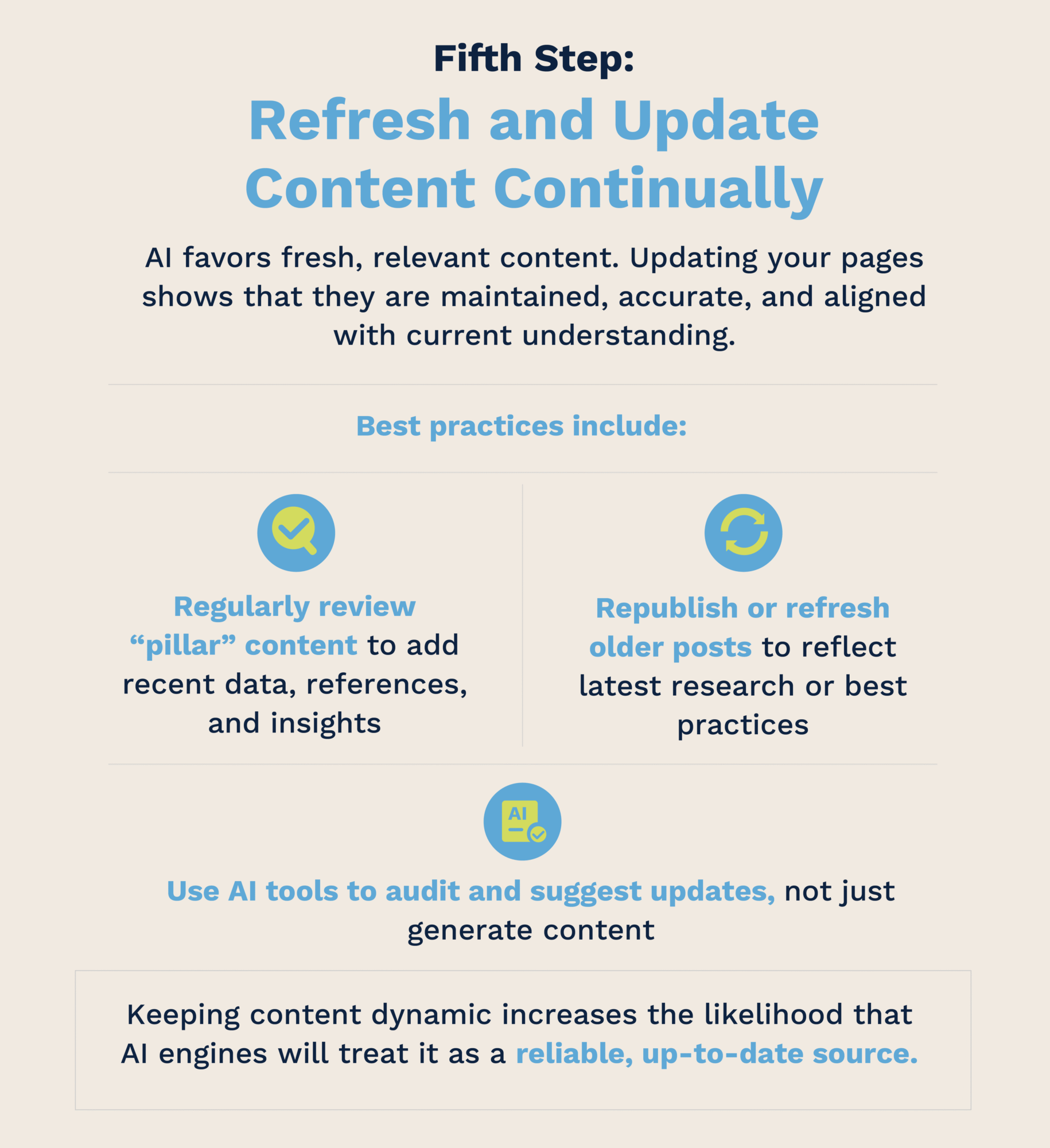
Fifth Step: Refresh and Update Content Continually
AI favors fresh, relevant content. Updating your pages shows that they are maintained, accurate, and aligned with current understanding.
Best practices include:
- Regularly review “pillar” content to add recent data, references, and insights
- Republish or refresh older posts to reflect latest research or best practices
- Use AI tools to audit and suggest updates, not just generate content
Keeping content dynamic increases the likelihood that AI engines will treat it as a reliable, up-to-date source.