WeChat

FlowBeijing
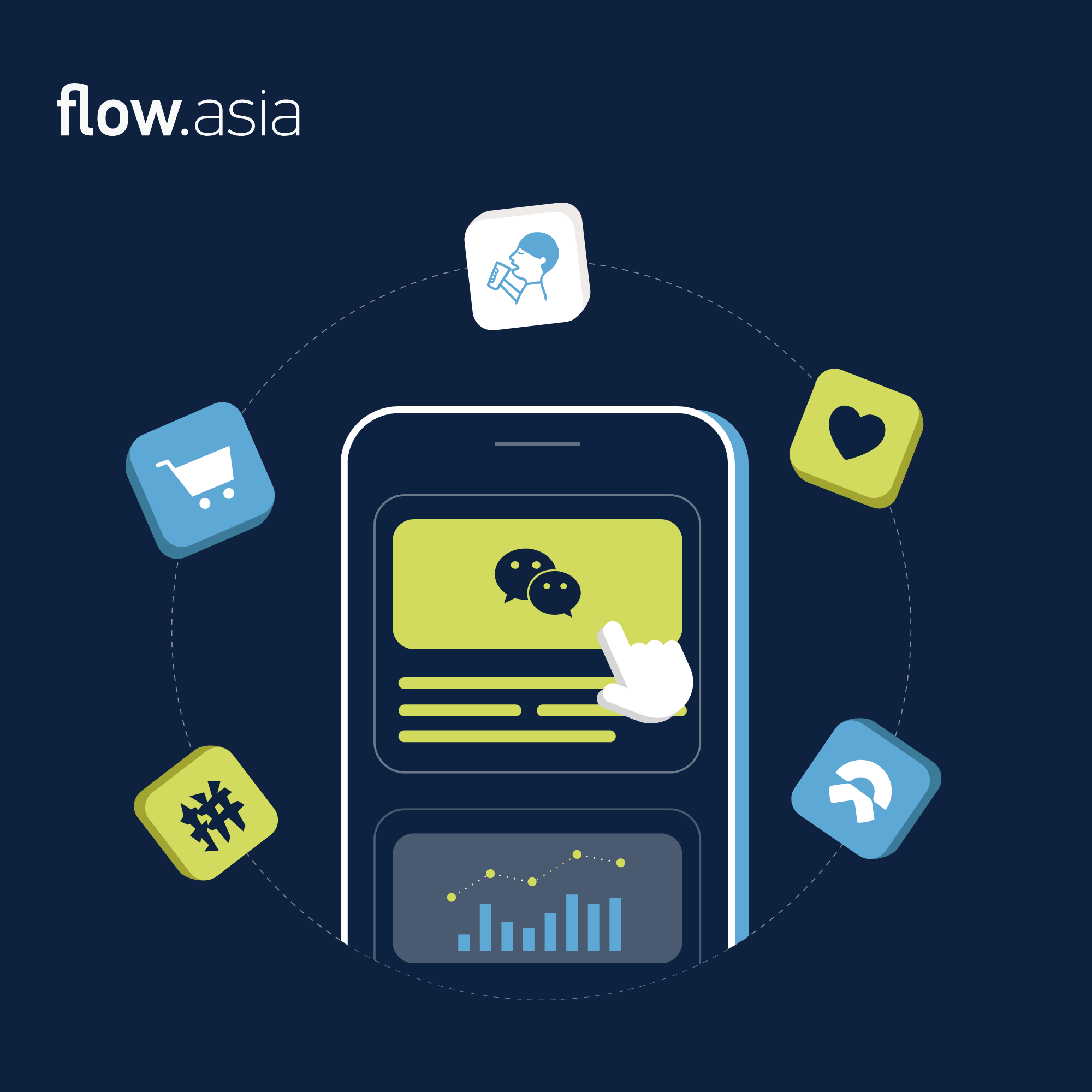
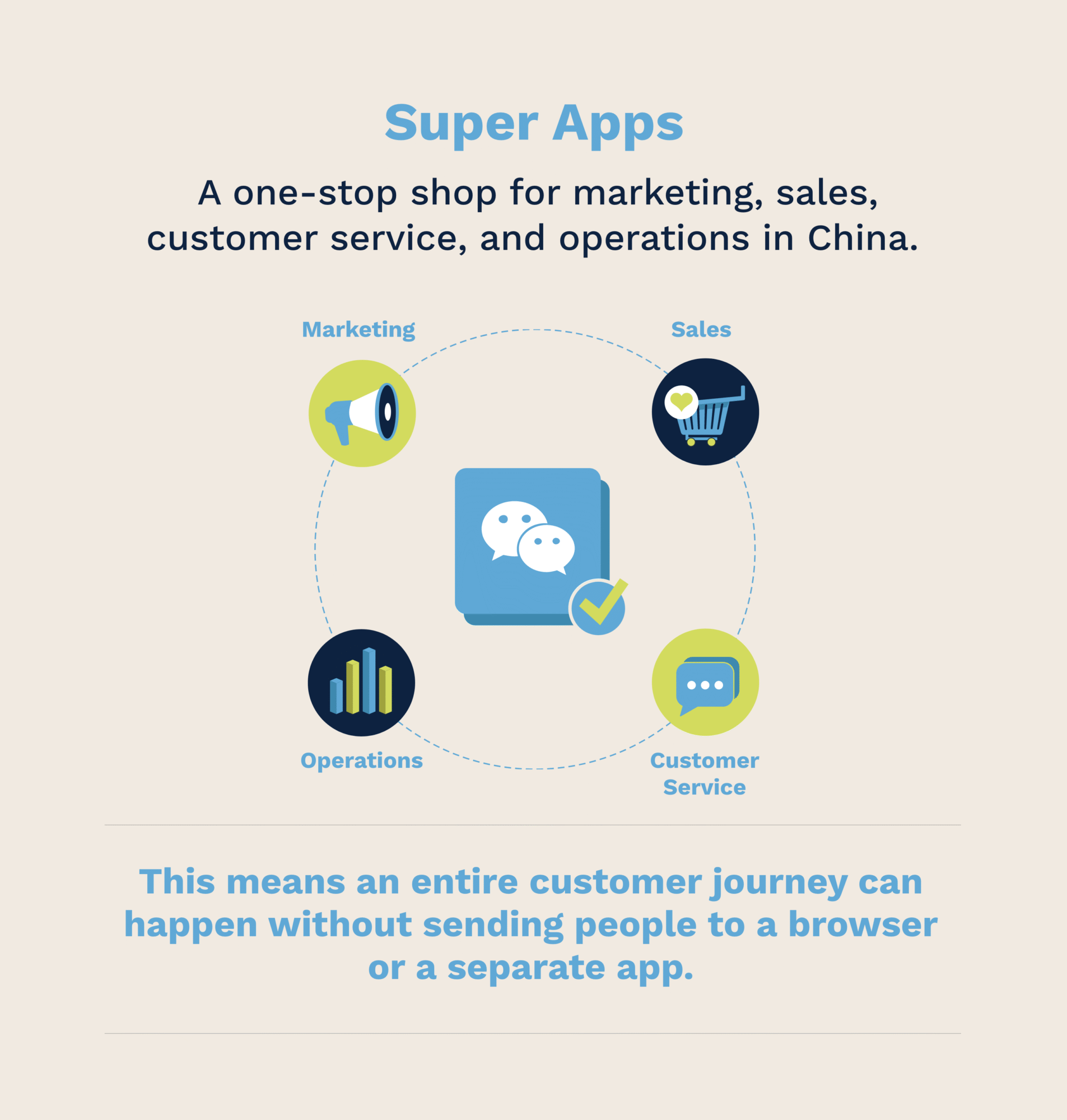
For a global audience, it’s essential to understand that WeChat is not just a messaging app like WhatsApp. It is a mobile operating system within an app. For businesses, it’s a one-stop shop for marketing, sales, customer service, and operations in China; this means an entire customer journey can happen without sending people to a browser or a separate app. That is why WeChat for Business has become a practical way to build reach, convert interest into sales, and keep relationships warm in China.
A working WeChat marketing strategy, including WeChat B2B marketing, connects the pieces. You promote with Moments ads or short videos. You invite people to follow your Service account for member perks and useful updates. You place clear links that open your Mini Program store within an article or a chat message, so the purchase takes just 2 taps. You keep support within WeChat via WeCom and group spaces, which helps retention because answers come from a verified account without leaving the app. This end-to-end path is why WeChat business results feel immediate when the setup is right.
WeChat B2B marketing and reaching decision makers
In B2B, WeChat for Business typically means publishing in-depth articles on a WeChat official account, with bookings, quote requests, or demo scheduling handled in a Mini Program. In China, decision-makers treat Official Account articles as references, so longer explainers and case studies work well when they end with a simple next step, such as a form or a booking button. Sales teams then continue the conversation in WeCom (WeChat Work, a business communication tool integrated with WeChat Official accounts), which keeps the contact tied to the company rather than a personal phone and preserves the full history after a handover. In practice, this means a prospect can read a technical piece at lunch, open a Mini Program to request a call, and receive a reply from a named account manager before the end of the day.
Successful campaign examples
Heytea shows how a Mini Program can solve a real problem while also building loyalty. Long lines in stores were replaced by pre-ordering via a Mini Program, payment via WeChat Pay, and pick-up without a queue. The brand layered this with AI-based drink suggestions, a gamified points system, and time-limited games that award coupons. The result was faster service, more orders, and a data system that improved recommendations with every visit.
Pinduoduo turned social sharing into a growth engine by building group buying around WeChat’s native behavior. A user opens a Mini Program, sees a deep discount, and shares it with friends and groups to form a team within a time limit. Browsing, sharing, and paying all stay within WeChat, removing friction and unlocking viral growth, especially in lower-tier cities where group chats are highly active and price sensitivity is strong.
NIO built a membership world that blends online and offline, keeping it running with WeChat at its core. The company operates a dual points system where NIO Points reward actions and purchases, while NIO Value measures longer-term contribution and influences status and voting power. Offline NIO Houses provide owners with a third space, while online activity occurs through the app and WeChat touchpoints. By the end of 2024, the app counted more than 13.5 million registered users and around 2.7 million monthly active users, with nearly 50 million pieces of user content. The community model drives referrals that account for around fifty-five percent of monthly sales, far above traditional averages.
Yunnan Tourism shows how a public sector use case can succeed on the platform. Its WeChat official account runs a Red and Black List that praises good operators and flags bad actors, with a searchable micro-site inside the account. In its first sixteen months, the account published fifty-five reports, listing three hundred ninety-seven Red entries and four hundred forty-eight Black entries. During the 2025 Spring Festival, tourism complaints in the province fell by 41.2 % year over year, a result tied to visible incentives and penalties delivered through a channel the public already uses.
The best WeChat for Business setups stay inside WeChat from start to finish. People read a post, tap a Mini Program, browse a product, and pay with WeChat Pay without leaving the app. Friends share posts in chats and groups, so useful content spreads on its own. Your WeChat official account brings everything together with short videos, payment options, and location capabilities, making the experience feel simple and connected. You learn what people enjoy as more people use it, and you can make better suggestions, as Heytea does by recommending drinks that keep customers coming back.
They also build for recommended traffic, not just follower traffic. WeChat’s Explore and Social Recommendation surfaces now push quality posts beyond the follower base, which means brands write with saves and shares in mind. The small label that shows how many friends have read a post serves as social proof and nudges people to open it and pass it along. When a Service account links articles to a store within a Mini Program, readers can buy while they are still engaged, which is why frictionless paths drive better conversion than any off-platform redirect.
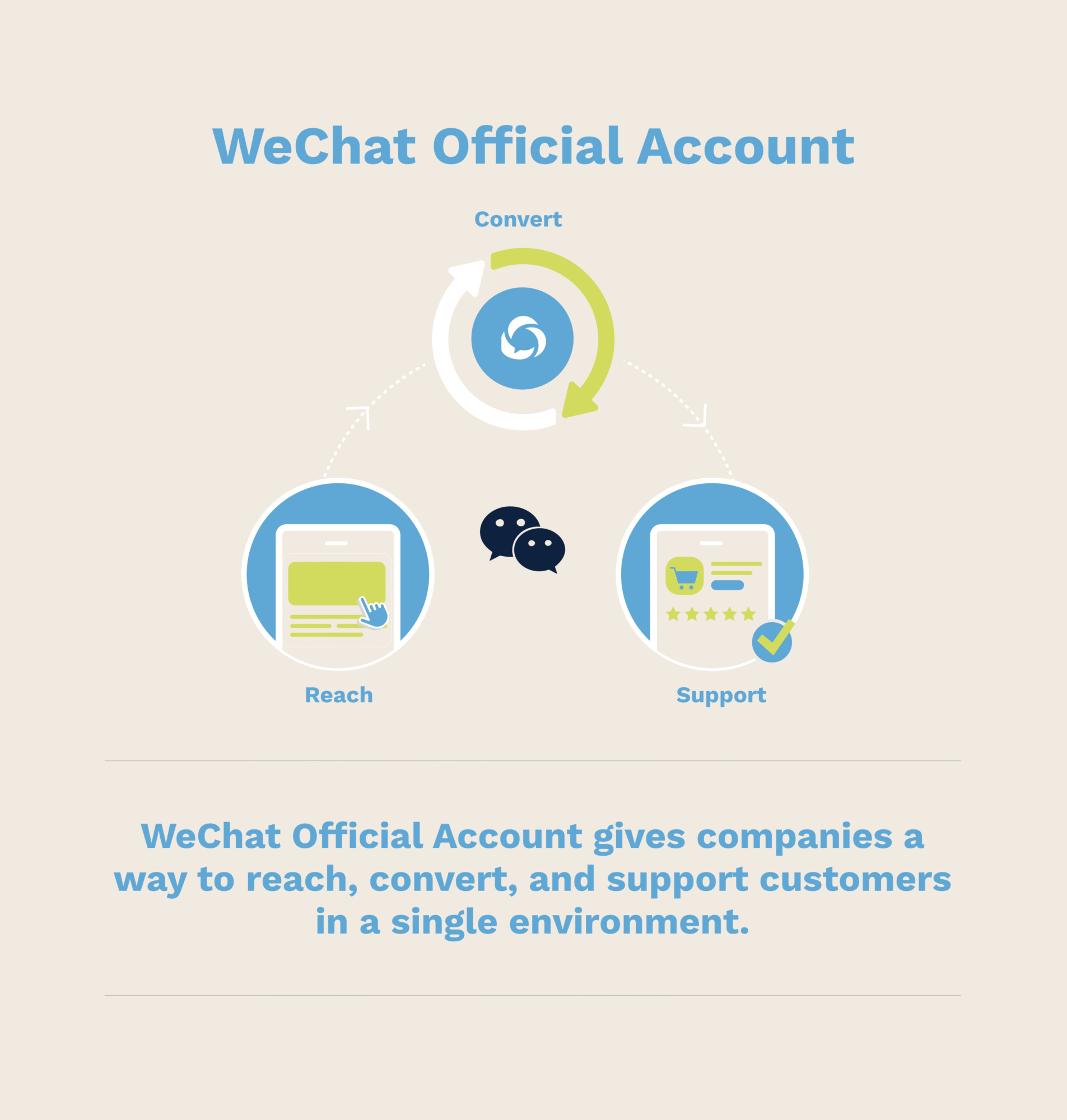
WeChat Official Account gives companies a way to reach, convert, and support customers in a single environment. A strong setup ties a WeChat business account to a Mini Program store, uses a WeChat official account for depth, leans on Video Channels for discovery, runs payments through WeChat Pay where allowed, and closes the loop with WeCom so service feels personal and fast. If you need help with your WeChat marketing strategy, Flow Asia can plan the WeChat for business account setup, build your Mini Program, and produce or localize content for the Chinese market, turning first-time visitors into repeat customers.