WeChat

FlowBeijing
A winning China web design strategy does more than translate an international website. It adapts to China’s digital ecosystem and to the needs of local business buyers. The website becomes a hub that connects with WeChat, loads fast inside the firewall, ranks on Baidu, and speaks to real decision cycles. That is how a global B2B brand turns visibility into qualified interest and long-term trust thanks to China website development.
Website localization in China: build around the local ecosystem
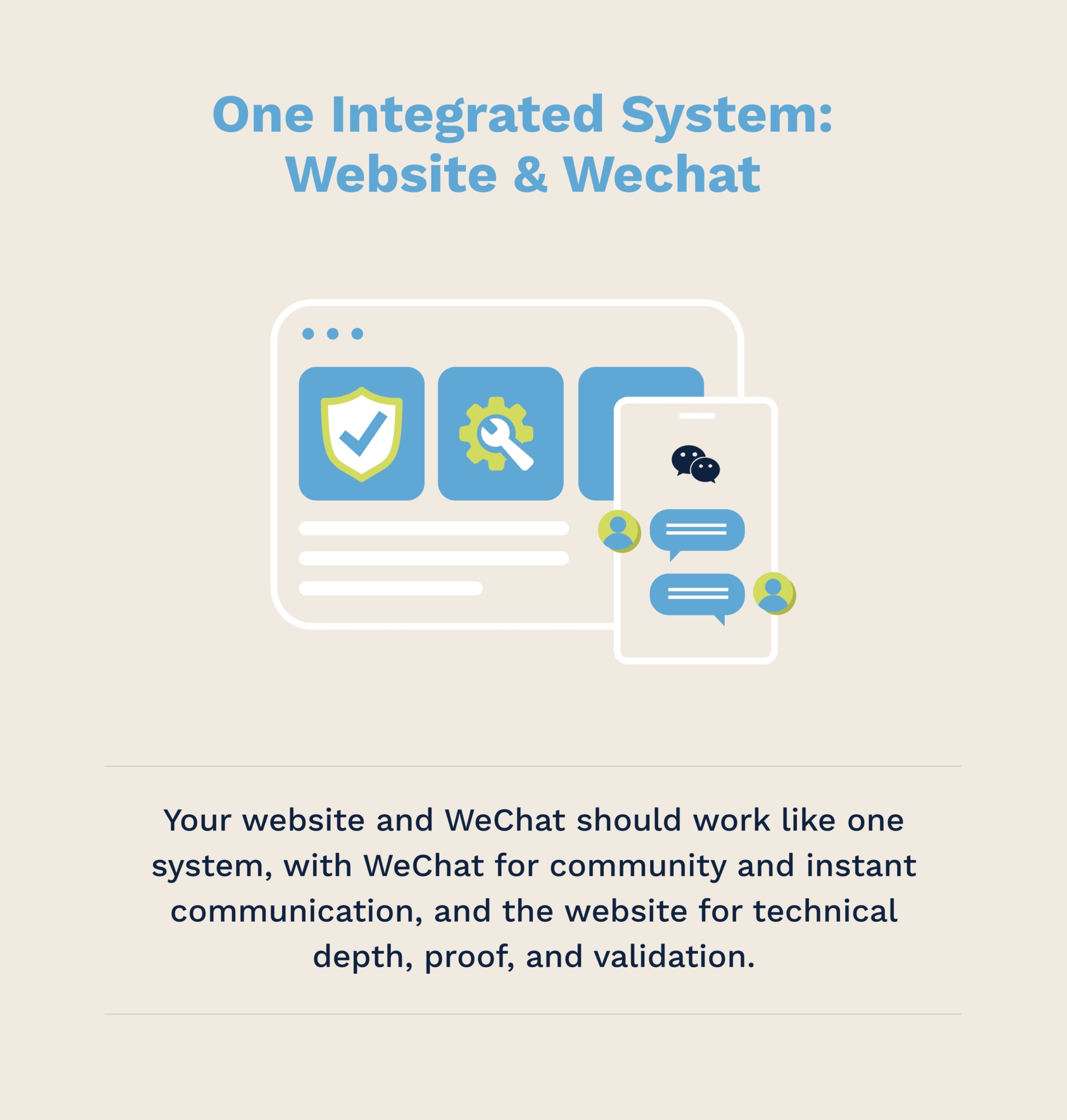
Your website and WeChat should work like one system. According to research from marketing intelligence companies, adding WeChat can increase engagement from Chinese customers by approximately 41% and cut the time it takes to respond to inquiries by about 37%. WeChat should be used for community and instant communication, then guide users to the website for technical depth, proof, and validation. This approach places your site where it belongs in the journey and supports Chinese website design that feels native. Chinese business buyers take their time making decisions. Many cycles last eight to twelve weeks and need proof at every step. Chinese readers should be able to see case studies and customer logos from your area on your site. It should publish white papers and data-led solutions that address local industry issues. It should also show local contact information, sales policies, and compliance markings like the China Compulsory Certification. These indicators make people feel less risky and help negotiations move forward. Most people use their phones to browse. Don’t think of mobile performance as an option; think of it as the default. Host in mainland China or run a premium CDN with strong China coverage. Slow overseas hosting can push bounce rates toward 85%, which means the session ends before your message starts.
Technical foundations for China website development
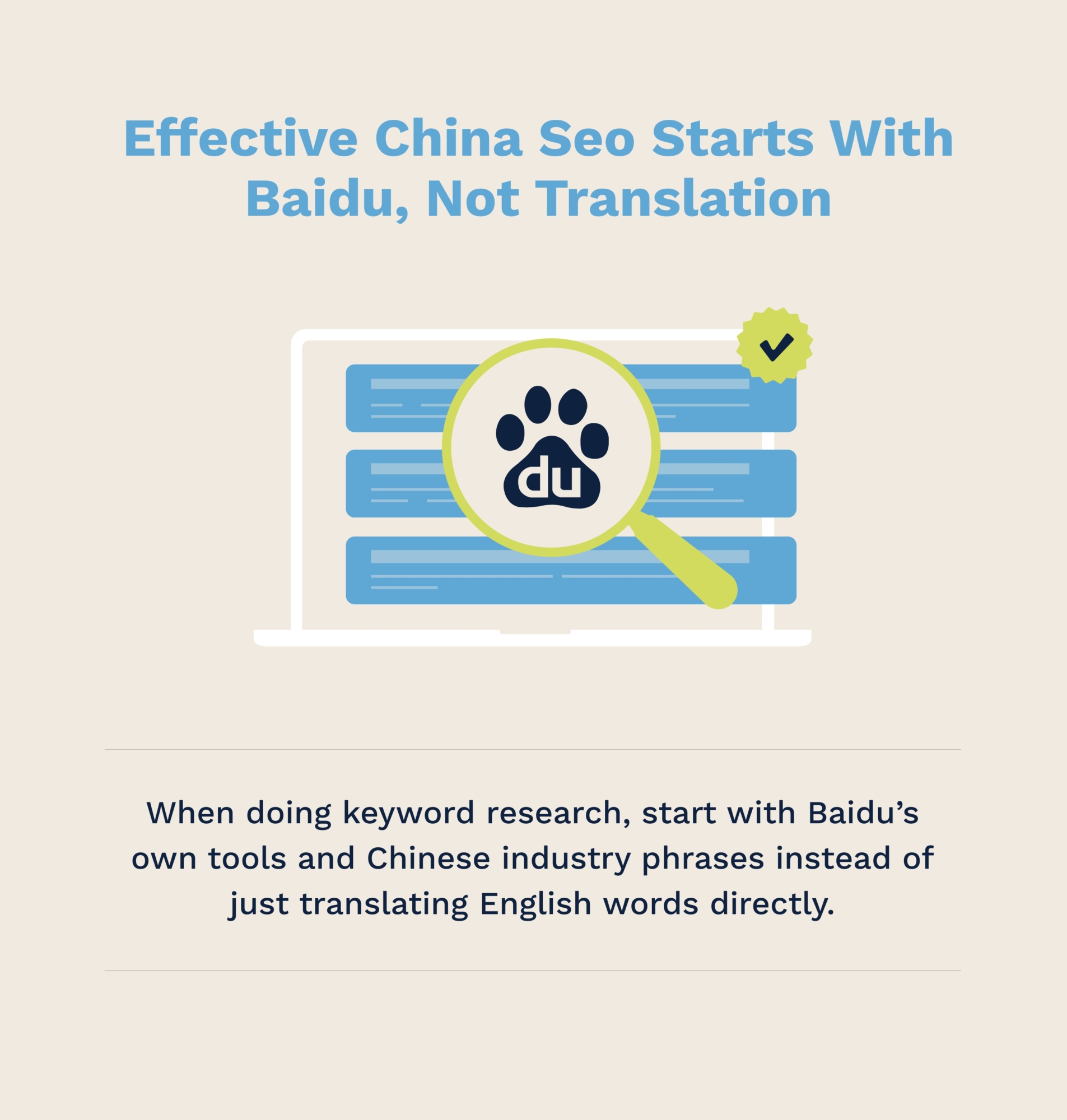
Baidu needs its own plan. When doing keyword research, you should start with Baidu’s own tools and Chinese industry phrases instead of just translating English words directly. Put the right meta tags and alt text on images. Keep a clean site structure and publish a sitemap.xml that Baidu can crawl. A server in mainland China speeds up crawling and helps with steady indexing. Fresh, text-rich content wins here. You can stay visible by posting Chinese blogs, industry remarks, and detailed product pages regularly. Speed and access are non-negotiable. Use a Chinese host or a global CDN with strong nodes in China, for example, Tencent Cloud or Alibaba Cloud. If you will host in China, complete ICP Beian registration with the Ministry of Industry and Information Technology. This filing is mandatory and should be planned early so launch dates are realistic.
China’s web design strategy in practice
Think of the site as a trust engine that works with WeChat. The WeChat official account handles updates and service, the Mini Program handles tasks and flows, and the site holds the deep content and proof that business buyers expect. When the parts connect, the user can move from a short WeChat message to a long read on the site to a form or a call without issues. This is a website localization that a Chinese team can operate every day. Use content that works for the local market. Localized case studies are more important than global summaries. Technical explanations in Chinese enable management and engineers to work together. Clear pages for after-sales service and local compliance markers make people feel better. Together, they make a Chinese website design that helps people make decisions over a lengthy period of time by giving them steady, useful responses.
Examples from top players
Chinese business media often highlight examples that combine useful content with smooth operations. Schneider Electric is a frequent reference point. The company used a popular science comic titled “电从哪里来” to explain complex power distribution in a simple way. This soft education approach built brand affinity and taught the market without relying on hard promotions. Schneider also runs “施想学堂,” an online knowledge hub hosted in China and linked through WeChat. It offers courses in automation, energy management, and green manufacturing, which establishes authority and generates qualified leads by solving problems first. Service is integrated as well. Schneider connects its WeChat account to Udesk so inquiries pass to a mix of AI and human agents for fast replies. The company invests in local talent and works with vocational colleges such as Shanghai Science and Technology Vocational College to build training bases, which strengthens long term credibility. In late 2025, leaders repeated a “China Center” strategy. Recent reporting cites strong global revenue in Q3 2025 at 97.21 billion euros and high single-digit growth in China for industrial automation, plus an expansion in Xiamen that will become the world’s largest base for medium voltage production.
The Energy and Sustainable Technologies group at Honeywell is known for having a complete digital marketing closed loop. The team connected its marketing automation to its CRM so that it could follow the whole process from the first visit to the conversion. That data loop helps with accurate lead cultivation and more personal communication, which is good for long B2B cycles in China.
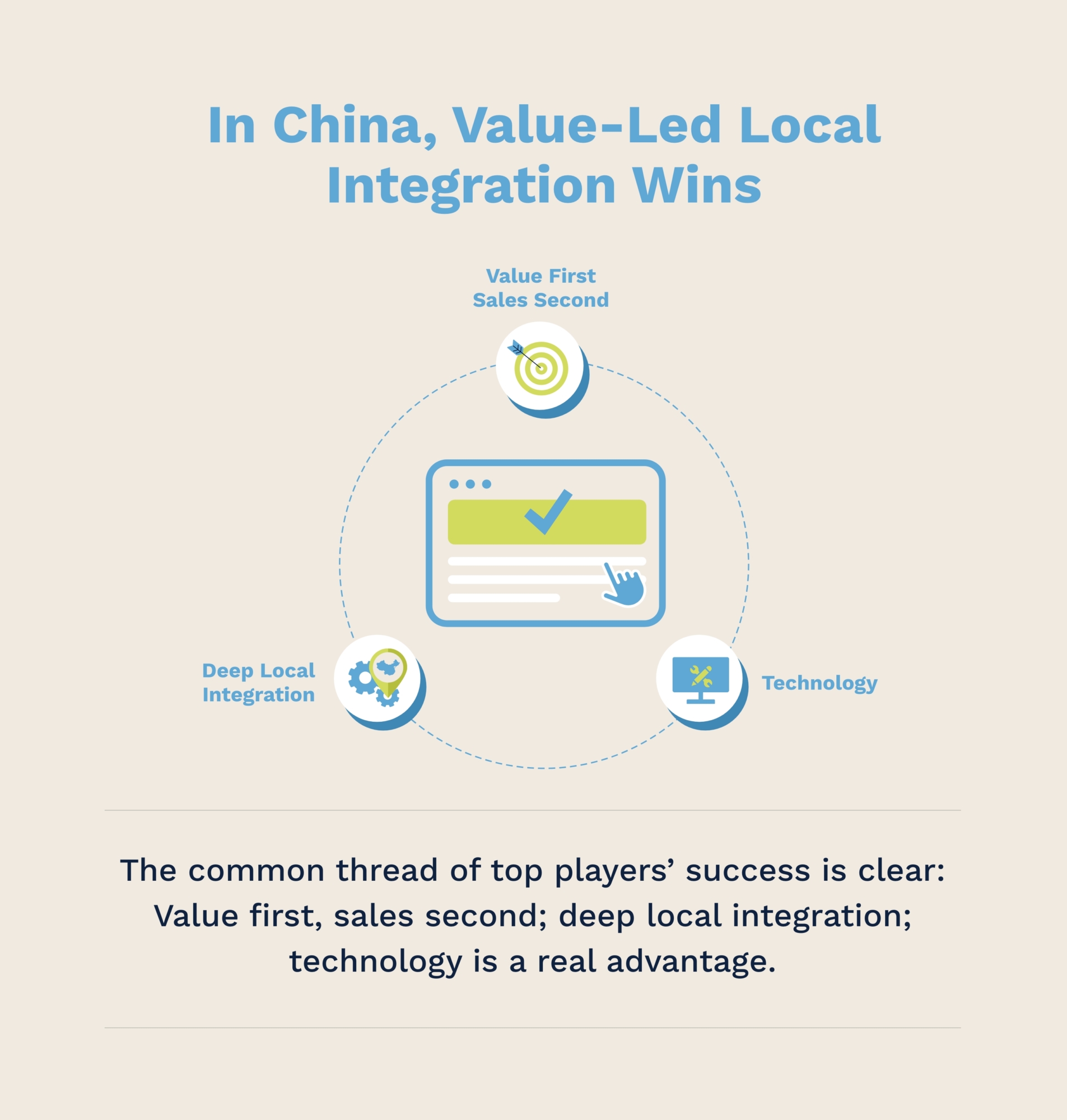
EdTech gives us a second way to look at performance at scale. Gaotu leans on an “All with AI” strategy and has invested more than one billion dollars in R&D to build a full-stack AI system. The company’s AI supports tens of thousands of teachers who serve millions of students at the same time. Its overseas product Gauth reached the top of the US iOS education chart, which shows the strength of its model in demanding markets. In Q3 2025, Gaotu reported revenue of 15.8 billion yuan, up 30.7 percent year on year, and won industry recognition in December as a 2025 benchmark education group. New AI-led products for children were launched in May 2025. The common thread is clear. Value first, sales second. Deep local integration. Technology is a real advantage, not a trend.
How to get started the right way
Begin with a focused local audit. Review Chinese competitors and their WeChat presence to learn which formats and topics earn attention. Partner with a China web agency that knows Baidu SEO, WeChat integration, and local UX. Plan a glocal content calendar that adapts international messages with local proof, market data, and formats that fit WeChat Official Accounts. Make the system able to communicate data from the start. Let users log in with WeChat and track engagement across your site and WeChat assets so you can see everything about a customer in one place. This helps China’s website development grow without having to start over.
Conclusion
A high-performance site for China is not a translated brochure. It is fast, visible on Baidu, and trusted by buyers because it is also part of the WeChat ecosystem, and it publishes professional content in Chinese. When you follow a clear China web design strategy that joins local platforms, technical requirements, and decision-maker needs, you move from simple translation to real market fit. Flow Asia can run a China-specific UX and performance audit, and we also plan, design, and build China-ready websites that integrate with WeChat from day one. If you need a partner to execute your China web design strategy end-to-end, Flow Asia is ready to help.